
Why Nearby Customers Are Harder to Reach Online
Most people who need a plumber, dentist, or coffee shop today start with a search on their phone. They type a phrase like “emergency plumber near me” or “best Italian restaurant open now,” and they usually act on one of the first few results. That makes the local search results page a crowded and competitive place, and businesses that are not visible there lose customers before those customers ever reach the website.
Several factors make nearby customers harder to reach than they used to be:
- More competitors appear in each area. Many nearby businesses now compete for the same map pack, which shows the top three local listings.
- Search results are personalized. Rankings shift based on the searcher’s location, device, and search history, so a listing that looks strong from your office may not appear for someone a few miles away.
- Customers compare before they call. People check reviews, photos, hours, and service details before they choose, and gaps in any of these lower trust.
If your business depends on people in your area, the first step is to audit how you currently appear. Search for your core services from a few neighborhoods you serve and note which competitors show up, what their listings include, and where your business is missing.
What Local SEO Services Actually Cover
Local SEO services are the work that helps a business appear in location-based searches, including the map results, the local pack, and the organic listings that mention a city or neighborhood. The discipline blends several areas that need to work together rather than as isolated tasks.
A complete local SEO engagement usually covers:
- Google Business Profile management, including categories, services, photos, posts, and accurate information.
- Keyword and location research to find the terms your customers actually use, such as “tree removal Chattanooga” or “same-day dental cleaning.”
- On-page optimization for service pages, location pages, and contact details.
- Technical health so search engines can crawl, index, and understand your site.
- Citations and backlinks that confirm your business name, address, and phone number across the web and point trusted sites to you.
- Review strategy for requesting, responding to, and learning from customer feedback.
- Reporting that connects search activity to calls, direction requests, form fills, and sales.
Not every business needs every piece at once. A new practice with an incomplete listing may gain the most from profile cleanup, while an established store with a strong listing may see larger returns from content and location pages.
How Our Local SEO Strategy Works
Our process begins with a baseline review rather than a standard package. We look at your current rankings in the areas you serve, your competitors’ listings, your website structure, and the reviews and citations already in place. This shows us where visibility is being lost and which changes are likely to produce the quickest return.
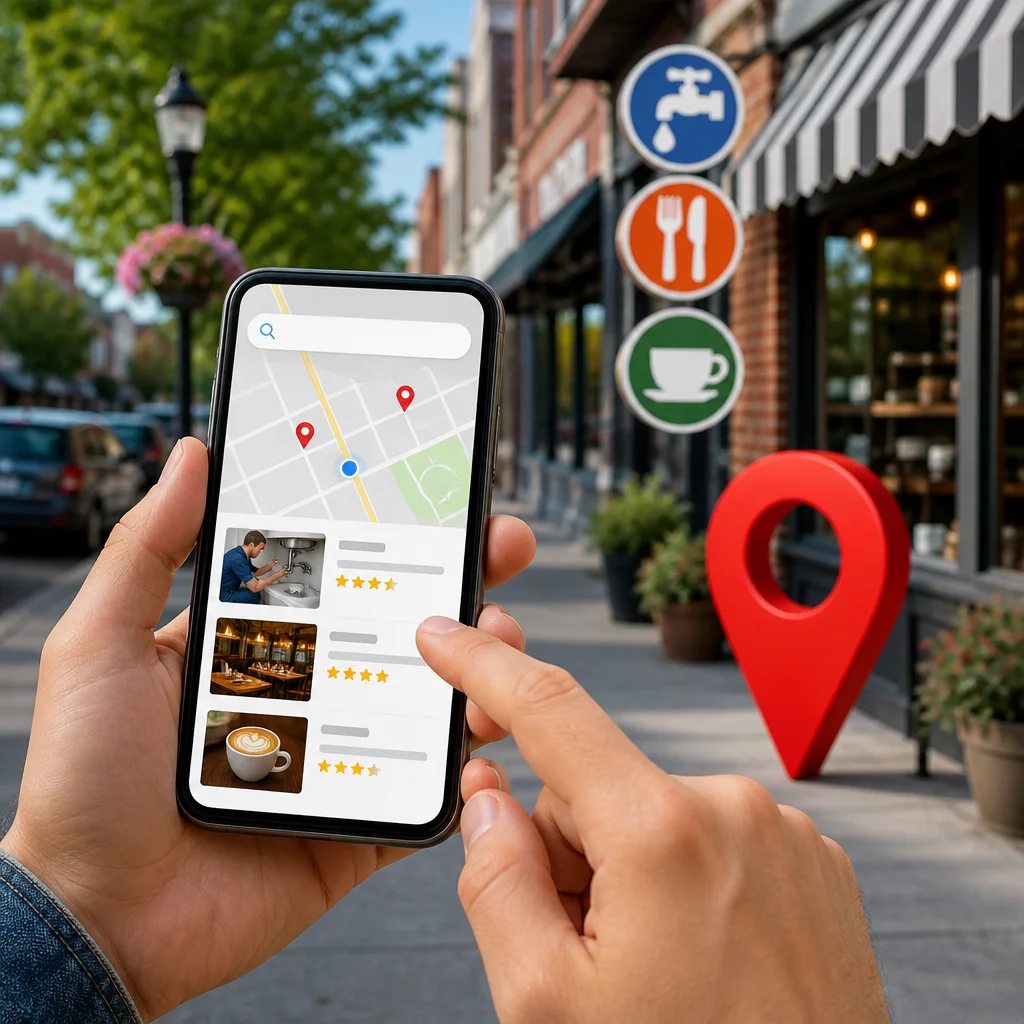
From there, we follow a simple sequence:
- Diagnose. Identify the search terms, service areas, and listing gaps that matter most for your revenue.
- Prioritize. Fix problems that block visibility first, such as a suspended profile, duplicate listings, or a site that is slow on mobile.
- Build. Improve profiles, pages, citations, and content on a schedule your team can maintain.
- Review. Check progress monthly, adjust targets, and expand to new neighborhoods or services once the core is performing.
For example, a home services company serving three counties might start by correcting its service area settings and consolidating duplicate listings. Over the next few months, it could add a dedicated page for each city it serves, with real project photos and local details instead of copied templates. Each step builds on the last rather than trying to change everything at once.
Optimizing Your Google Business Profile for Map Results
Your Google Business Profile is often the single most important asset in local search. It controls what appears in the map pack and the business panel that people see when they search by name or category.
Focus on these fields first:
- Primary category. Choose the category that best matches your main revenue source. A secondary category can help, but avoid stuffing the list with loosely related options.
- Business name. Use the name your customers know. Adding keywords to the name violates Google’s guidelines and can lead to suspension.
- Address and service areas. If you visit customers rather than serving them at a storefront, set your service areas and hide your address where appropriate.
- Hours, phone, and website. Keep these accurate, including holiday hours. Outdated information quietly erodes trust.
- Services and products. Add each service with a short, clear description. This gives Google and customers specific details to match against.
- Photos. Upload real photos of your team, work, and location on a regular basis. Profiles with fresh images tend to earn more direction requests and calls.
- Posts and Q&A. Publish updates about promotions, events, or new services, and answer common questions before customers ask them.
Check your profile once a month and confirm that your information matches your website and other listings exactly.
On-Page and Technical Signals That Support Local Rankings
A strong profile gets noticed, but your website must back it up. Search engines look for clear evidence that your site serves a specific place and that it works well for visitors.
Start with these on-page elements:
- Location-specific titles and headings that name the city or neighborhood you serve, written naturally.
- Service pages with real detail, including what you do, who you serve, how pricing or scheduling works, and what makes you different.
- Consistent NAP details (name, address, phone) in the header or footer, matching your profile exactly.
- Embedded map and contact information on the contact page.
- Internal links from your homepage and service pages to the location pages that matter most.
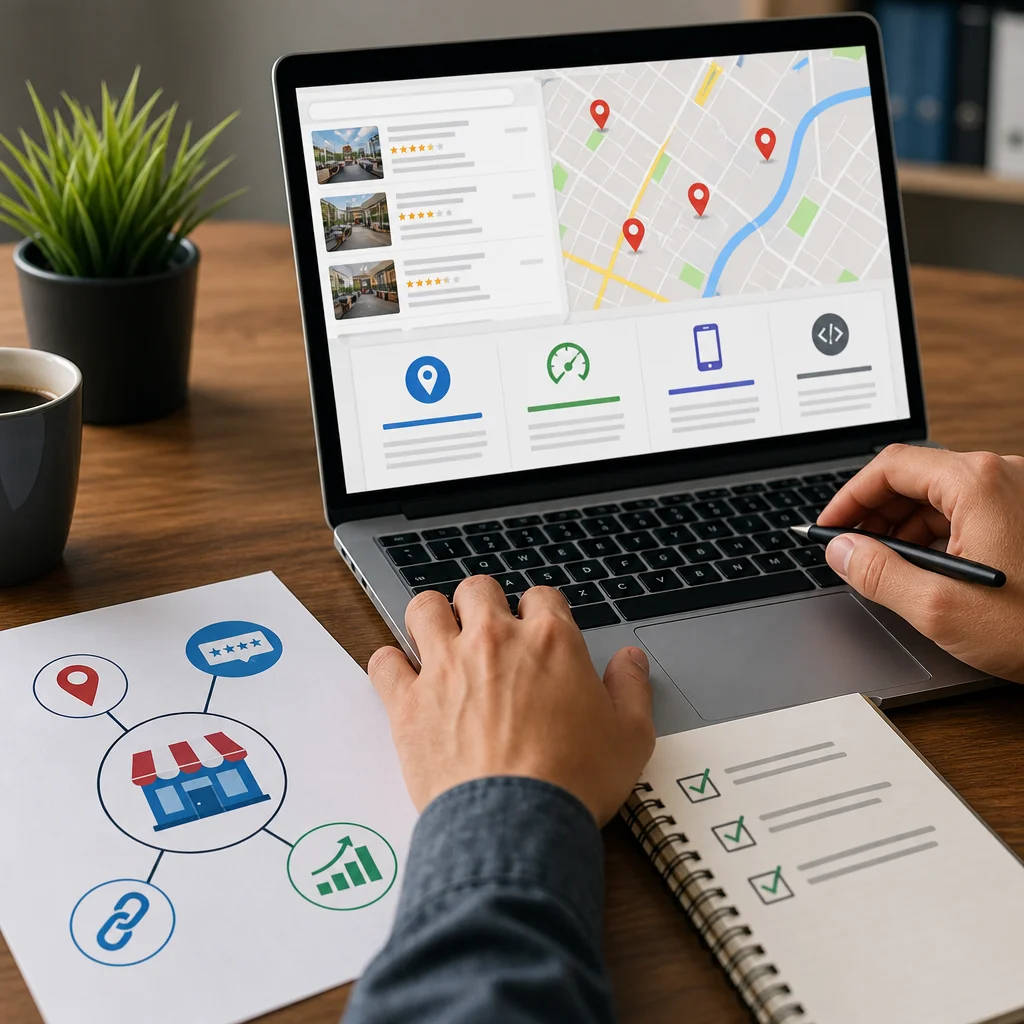
On the technical side, prioritize:
- Mobile speed and usability, since most local searches happen on phones.
- Crawlability, meaning no accidental blocks in your robots file and a clean sitemap submitted in Search Console.
- Structured data such as LocalBusiness markup that describes your address, hours, and services.
- Secure, error-free pages with working redirects and no broken links.
A simple test is to ask a stranger to find your service in your city using only your website. If they struggle to tell where you operate or what you offer, search engines likely have the same difficulty.
Building Local Citations and Backlinks That Build Trust
Citations are online mentions of your business name, address, and phone number, usually on directories, industry sites, and local listings. Backlinks are links from other websites to yours. Both signal to search engines that your business is real, established, and relevant to its area.
For citations, aim for accuracy first and volume second. Begin with the major data aggregators and the directories most relevant to your industry, then check for duplicates. A single incorrect suite number can split your authority across several listings, so cleanup often produces better results than adding new ones.
For backlinks, focus on relationships that a local business would naturally have:
- Local chambers of commerce and business associations
- Community sponsorships and charity events
- Local news coverage or event recaps
- Suppliers, partners, and professional associations
- Local blogs and community organizations
A practical example: a veterinary clinic that sponsors a local animal shelter fundraiser can ask the shelter to list its sponsors on their site, with a link to the clinic. That single link carries more weight than dozens of low-quality directory submissions.
Managing Reviews to Strengthen Local Reputation
Reviews influence both rankings and customer decisions. Businesses with more recent, detailed, positive reviews tend to appear more often in the map pack and convert more of the people who see them.
A sustainable review process looks like this:
- Ask at the right moment. Request reviews shortly after a successful job or visit, when satisfaction is high.
- Make it easy. Send a direct link to your review form by text or email.
- Never ask for only positive reviews or offer incentives in exchange for them, since that violates platform rules.
- Respond to every review. Thank people for praise and address concerns calmly, without arguing details publicly.
- Watch for patterns. Repeated complaints about wait times or pricing point to operational problems worth fixing.
Our reputation monitoring service tracks new reviews across platforms and flags anything that needs a response. Handling reviews consistently helps the people reading them see how you treat customers, which often matters as much as the star rating itself. You can learn more about our approach on our reputation management services page.
Measuring Local Search Growth and Lead Quality
Rankings alone do not tell you whether local SEO is working. A keyword can climb several positions and still produce no calls if the traffic is wrong or the page does not convert.
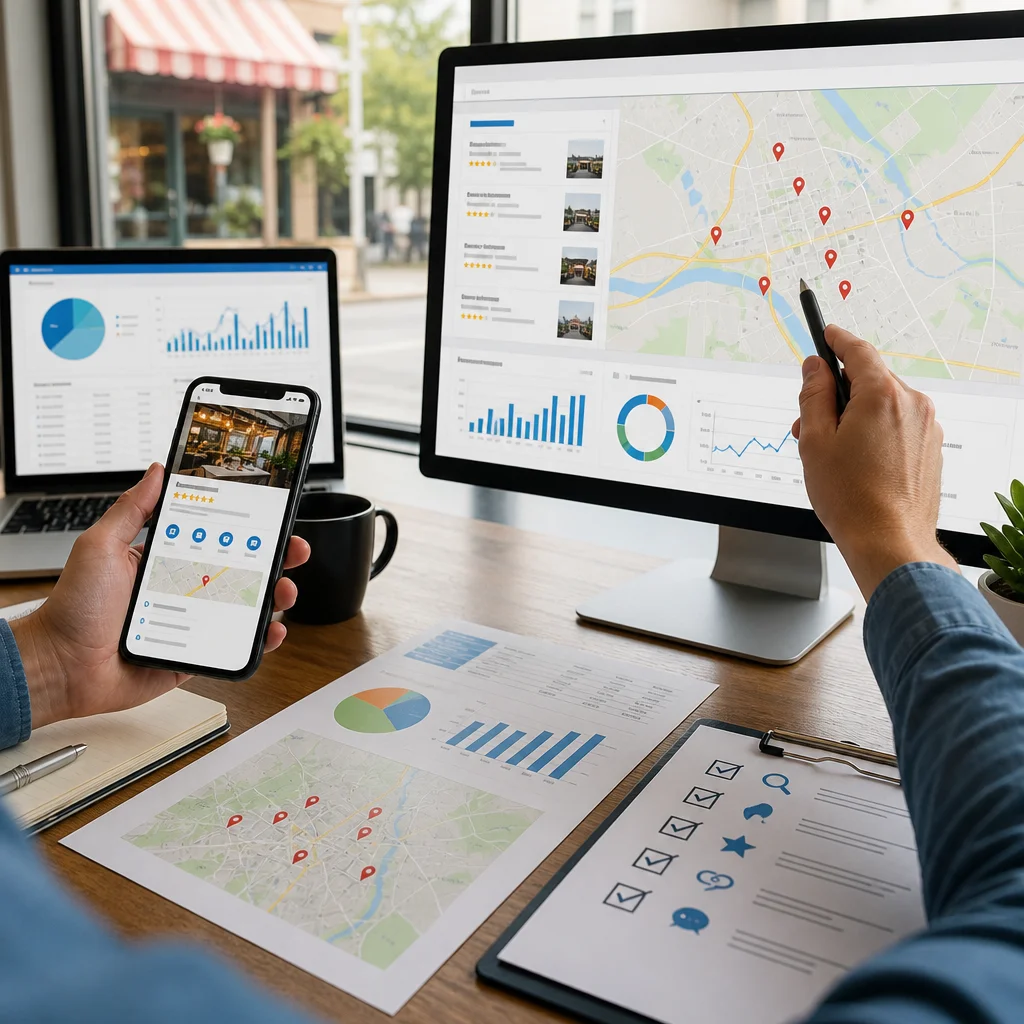
Track a combined set of metrics each month:
- Local pack and map visibility for your priority terms, measured in the areas you serve.
- Profile actions such as calls, website clicks, direction requests, and booked appointments from Google Business Profile.
- Organic traffic to location and service pages and how many of those visits lead to form fills or calls.
- Review volume, average rating, and response rate.
- Lead quality, meaning whether the contacts are inside your service area, ready to buy, and a good fit for your business.
Set a baseline before making changes so you can compare results honestly. A good early target might be a measurable increase in direction requests from one neighborhood within three months, followed by expansion once the pattern holds.
Getting Started With Our Local SEO Services
If you want more customers from your service area and are not sure where to begin, the most useful first step is a clear picture of where you stand. We start every engagement with a local visibility audit that covers your profile, your website, your citations, your reviews, and your competitors in each area you serve.
Here is how to get started:
- Gather your basics. Have access to your Google Business Profile, website analytics, and a list of the services and neighborhoods that matter most.
- Book a consultation. We will review your current results and identify the two or three changes most likely to help.
- Choose a plan. Our local SEO services can cover profile management, on-page and technical work, citations, content, and reporting, scaled to your goals and budget.
- Review progress together. We report monthly on visibility, calls, and leads so you can see what is working.
For broader search visibility beyond your immediate area, our search engine optimization services can support your organic growth alongside your local efforts. Reach out through our website at https://top3seocompany.com to schedule your audit and start building a local presence that brings the right customers to your door.
