
Why Local Businesses in Chattanooga Struggle to Stand Out on Social Media
Chattanooga has a strong mix of independent restaurants, healthcare practices, home service companies, retailers, and professional firms. Many of them post on social media, but far fewer post in a way that makes local customers stop scrolling and take action.
We see the same patterns repeatedly. Owners post when they have time, the content is mostly promotional, and the message looks the same as every other business in the feed. Local audiences notice that quickly.
Common problems include:
- Posting without a local angle. Content rarely references neighborhoods, local events, or the everyday life of Chattanooga residents.
- Platform guessing. Businesses often spread themselves across every network instead of focusing on the two or three where their customers actually spend time.
- No clear purpose. Posts lack a defined goal, such as booking calls, driving store visits, or collecting reviews.
Next step: Look at your last 20 posts and label each one as “local,” “promotional,” “educational,” or “personal.” If fewer than a quarter are local, that is your first area to fix.
The Hidden Cost of Inconsistent Social Media Presence
Inconsistency rarely looks like a problem in the moment. A business posts three times in one week, disappears for a month, then comes back with a flurry of activity. The real cost shows up later, in lost trust and lost visibility.
Algorithms tend to reward accounts that publish on a predictable schedule and generate engagement. When activity drops off, reach drops with it. Customers who discover your page after a gap often find an outdated feed, which makes your business look less active than it is.
Consider a home renovation company that posts project photos heavily in spring and then goes quiet through the fall. Homeowners researching kitchen remodels in October land on a page with nothing recent, and many move on to a competitor with a steady feed.
Next step: Choose a realistic posting cadence you can sustain for six months, such as three posts per week, and build a simple calendar before you publish anything else.
How Our Social Media Marketing Approach Works
We start every engagement by learning how your customers find you and what they need before they buy. That means reviewing your current accounts, your best-performing content, your competitors in the Chattanooga market, and the questions your sales team hears most often.

From there, our process generally follows four stages:
- Audit. We review existing profiles, follower quality, posting history, and engagement patterns.
- Strategy. We select the platforms that match your customers and define goals such as leads, bookings, or foot traffic.
- Content planning. We build a monthly calendar that mixes educational posts, local stories, customer proof, and offers.
- Execution and refinement. We publish, monitor response, and adjust based on what your audience actually engages with.
This approach keeps content tied to outcomes rather than to a vague goal of “more followers.” It also means you always know why each post exists.
Next step: Write down the single action you most want a social media visitor to take, whether that is calling, booking, visiting, or filling out a form. Every post should support that action.
Custom Content Creation and Video Production for Local Brands
Generic stock imagery is one of the fastest ways to make a local business look interchangeable. Customers want to see the people, storefront, products, and results behind the brand they are considering.
Our content work focuses on material that feels authentic and specific to your business:
- Photography of your team, workspace, products, and completed projects
- Short-form video for Reels, TikTok, and YouTube Shorts, including behind-the-scenes clips and quick explainers
- Testimonial videos featuring real customers talking about their experience
- Copy and captions written in plain, local language that matches how your customers talk
For example, a dental practice might film a two-minute clip explaining what a routine cleaning involves. That single video can answer common patient questions, reduce anxiety for first-time visitors, and be repurposed across several platforms.
Next step: Pick three customer questions you hear every week and plan a short video answering each one. These usually perform better than polished brand ads.
Running Targeted Campaigns That Attract Chattanooga Customers
Organic posts build familiarity, but paid campaigns can put your business in front of people who are ready to act. Targeting is what separates an effective campaign from wasted spend.
For local businesses, we typically target by:
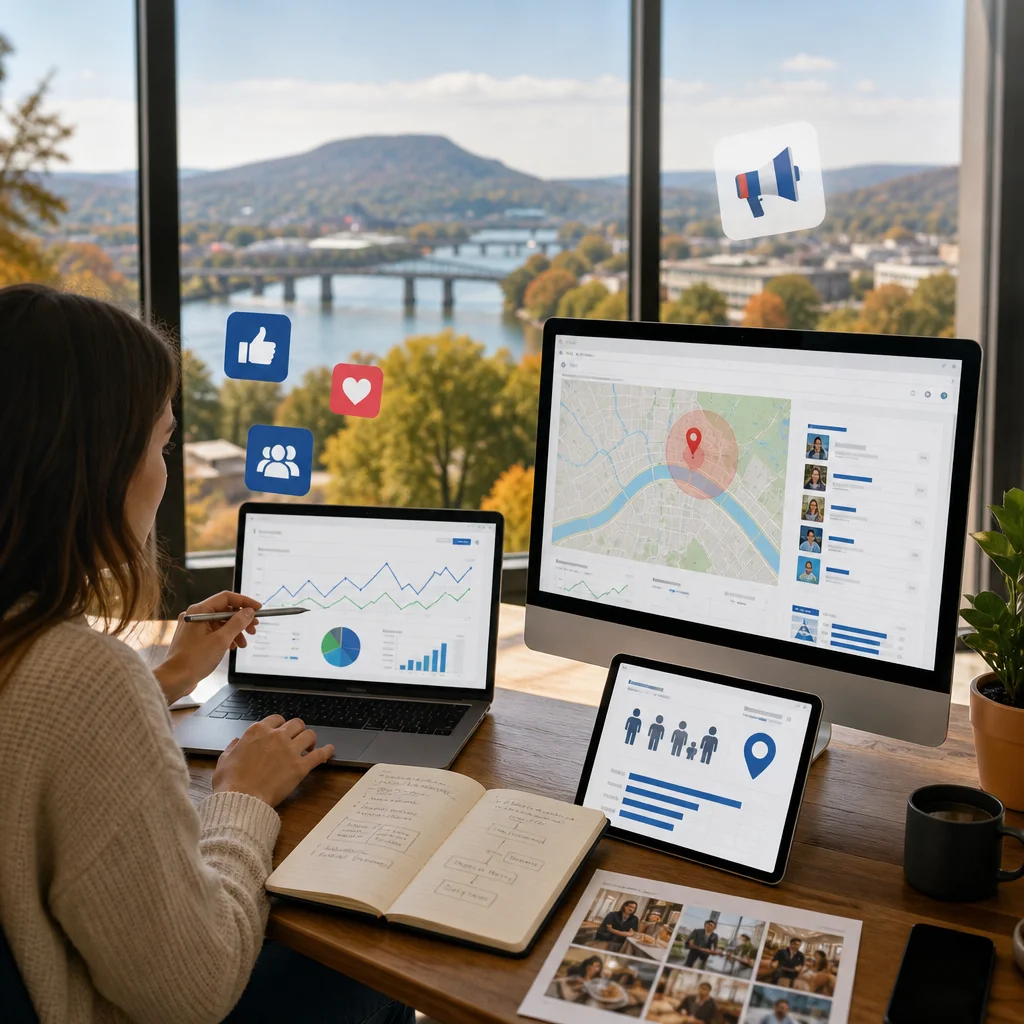
- Geography: Chattanooga and surrounding neighborhoods or commuting areas
- Demographics and interests: Age, household details, and interests relevant to your services
- Behavior: People who have engaged with similar businesses or visited your website
- Timing: Seasonal peaks, such as spring cleaning for service companies or holiday shopping for retailers
A simple example: a landscaping company might run a four-week campaign targeting homeowners within a set radius of the business, promoting a spring cleanup package. Ads link to a landing page with a clear phone number and a booking form, and performance is reviewed weekly so budget moves toward the best-performing audiences.
Our social media campaigns are built around this kind of measurable, locally focused structure.
Next step: Set a fixed monthly campaign budget and define one measurable goal, such as ten booked consultations, before launching any ad.
Connecting Social Media to Local SEO and Google Business Profiles
Social media and search visibility reinforce each other more than most business owners expect. Active profiles signal that a business is operating and engaged with its community, and consistent local information across platforms supports how search engines understand your location.
Key connections include:
- Consistent business information. Your name, address, phone number, and hours should match across your website, Google Business Profile, and social profiles.
- Google Business Profile posts. These can mirror your best social content and keep your listing fresh.
- Local keywords in captions and descriptions. Naming neighborhoods and services in natural language helps both people and search engines connect your content to local searches.
- Shared content. Posts that link back to your website can send engaged visitors to pages that convert.
A restaurant that posts weekly menu updates on Instagram and mirrors them to its Google Business Profile gives customers two reasons to find and choose it. The profile stays current, and the social feed reinforces the same information.
Next step: Audit your Google Business Profile and social bios this week, and correct any mismatched name, address, or phone details.
Managing Online Reviews to Build Trust and Reputation
Reviews influence local decisions heavily. Prospective customers often read several reviews before calling, and how you respond to criticism matters as much as the ratings themselves.
A practical review process includes:
- Ask consistently. Send a short request to recent customers with a direct link to your review page.
- Monitor every platform. Track Google, Facebook, and industry-specific sites so no review goes unanswered for long.
- Respond promptly and specifically. Thank positive reviewers by name when possible. For negative reviews, acknowledge the issue, avoid defensiveness, and offer an offline path to resolve it.
- Share strong feedback. Highlight meaningful reviews in your social content, with permission.
Responding to a complaint about a delayed appointment with a calm, specific reply often reassures the next dozen readers more than any ad could.
For businesses that need structured support here, our online reputation management services cover monitoring, response strategy, and review generation.
Next step: Set up alerts or a weekly check for new reviews on every platform where your customers leave feedback, and draft a short template for each type of response.
Measuring Results and Growing Your Local Business
Good reporting connects social activity to business outcomes. Likes and impressions matter only when they help you understand whether customers are engaging, visiting, calling, or buying.
Track a small set of metrics tied to your goal:
- Reach and engagement rate to judge content resonance
- Profile visits and follower growth from local areas
- Link clicks and form submissions to measure traffic quality
- Calls, bookings, or store visits attributed to social campaigns where possible
- Review volume and average rating on key platforms
Review these monthly and compare against the previous period. Look for patterns, such as video posts outperforming photos or certain neighborhoods converting better than others, then shift effort toward what works.
Next step: Choose three metrics that connect directly to revenue and create a one-page monthly report you can review in under 30 minutes.
Partnering With Us for Sustainable Local Growth
Sustainable growth on social media comes from steady execution, local relevance, and honest measurement. Most local businesses do not need to be everywhere online. They need a focused plan, consistent content, and a clear link between their efforts and their results.
We work with growth-minded businesses in Chattanooga and beyond to build that plan. Our team handles strategy, content, campaigns, search connections, and reputation management so you can focus on serving customers.
If you are ready to build a more consistent presence, start by reviewing your current profiles against the steps above. Then reach out to talk through what a focused, measurable plan would look like for your business.
